

Below are a few of the books I’ve read and found interesting and useful either in learning to live with my own Neurodifference or in my training to be a Transactional Analyst. I often recommend these to my clients and fellow therapists.
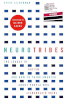
‘Neurotribes’ is long (500+ pages), but gives a fascinating account of how the neurodiversity movement got to where it is today. Silberman guides the reader along the many paths, forks, dead ends and controversies that have raged over the last century as doctors and parents struggled to cure or accommodate Neurodiversity. Along the way he lays bare how little we know about neurodiversity and how neurotypical egos and pseudoscience dominated the conversation. Sometimes tragic, sometimes uplifting, an essential read.
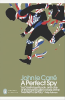
‘A Perfect Spy’ is probably the best rendering of the internal landscape of the Boarding School Survivor ever written.

In my work I often talk about the importance of a “practice”. ‘Zen in the Art of Archery’ is a short primer into the Japanese practice of Archery, and the power of moving beyond talking into intuitive “knowing”. I feel it is important to have something that you make space for in your life and this book outlines why.
Nick Duffel has written extensively on the psychological processes involved in Boarding School. An ex-Boarding School pupil himself, ‘Wounded Leaders’ builds on his psychotherapeutic work with ex Boarders, using it to deliver a thought provoking assessment of how Britain is governed.
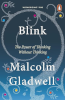
In ‘Blink’, Malcolm Gladwell writes clearly about the processes that shape how we perceive the world.
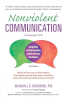
This book is excellent for anyone struggling with communication. It gives clear guidance about how to move from emotionally charged dialogue which frequently gets us nowhere, to understanding why the dialogue is emotional and then provides a framework to help communicate with others. Marshall Rosenberg writes well and his techniques are used worldwide in sometimes highly challenging situations.
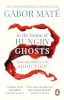
Gabor Mate works with addiction in Vancouver. In ‘In the Realm of Hungry Ghosts’ he explores the addictive process and it’s links to childhood experiences. He also explores his own addictive tendencies and puts this in the context of his ADHD. A powerful read for those seeking to understand the links between addictive behaviours, ADHD and childhood.
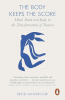
A recent classic. In his book ‘The Body Keeps the Score’ Bessel van der Kolk describes the effects of PTSD on the brain and body and explains the reasons why some treatments work and others don’t.
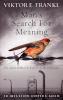
A survivor of the death camps, Victor Frankl, uses his experiences to explore how we make meaning and how this can sustain us even in the darkest of times. An acknowledged classic, ‘Man’s Search for Meaning’ is an accessible introduction to an existential issue that underpins many peoples desire for personal growth.
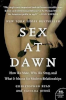
Prepare to be challenged. ‘Sex at Dawn’ looks at sex and relationships from an evolutionary standpoint, comparing humans to other species and questioning many of our assumptions about why we relate the way we do.
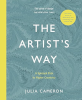
I often talk about “journalling” and “morning pages”. ‘The Artists Way’ is where this comes from. Julia Cameron explains why “just writing” is a powerful process that opens us to ourselves. This book builds on the basic concept to foster creativity and the ability to look at ourselves and our surroundings anew. A well known classic and recommended in many creativity courses.
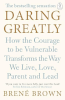
Brene Brown’s bestseller ‘Daring Greatly’ takes her scientific research in vulnerability and makes it accessible. One of those crossover books that enters the mainstream overnight, this book launched Brene into Ted Talk territory and a lucrative personal development career.
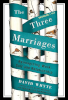
The poet David Whyte explores the things that shape our lives and offers insights into how we might rethink these relationships to aid in our search for ourselves. Not widely known, Whyte is a beautiful writer and rare thinker who converts experience into insight and draws conclusions that are applicable to everyone.
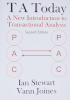
‘TA Today’ contains all the TA Tools in a self-help format. This book is the recommended reading for all beginning Transactional Analysts. Written in accessible language and well laid out, with good examples it’s the best source for the “Classic” type of TA that I use daily.
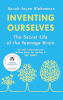
‘Inventing Ourselves’ won the Royal Society’s 2018 Science Book Prize for it’s clear and scientific approach to untangling what is happening as our brain develops as a teenager. Based on the latest research it helps understand why we behave the way we do during this often turbulent time of our life.
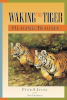
Peter Levine is one of the early authors who understood the links between the physiological and psychological effects of Trauma. In ‘Waking the Tiger’ he explain in easy to understand language the process of Trauma and how it can be alleviated. Accessible and comprehensive it quickly became a standard text for those working in this field.
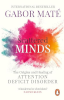
A second book from Gabor Mate, ‘Scattered Minds’ looks at ADHD in a similar way to his work on addictions, highlighting how the brain develops and how this is affected by the environment. Mate is sometimes controversial, in viewing ADHD as a response to a challenging environment, however this is a useful read as an antidote to the genetic approach and the reframing helps move towards understanding oneself and creating a way of living that suits the individual.
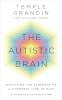
Temple Grandin is one of the best known Autism personalities in the US. One of the first to write about and promote the idea of living a fulfilling life with autism. Sometimes a controversial figure in modern autism circles for her description of how she benefited from her mothers behavioural approach during her childhood. ‘The Autistic Brain’ explores neurological difference and how this affects perception, emotion and behaviour.